
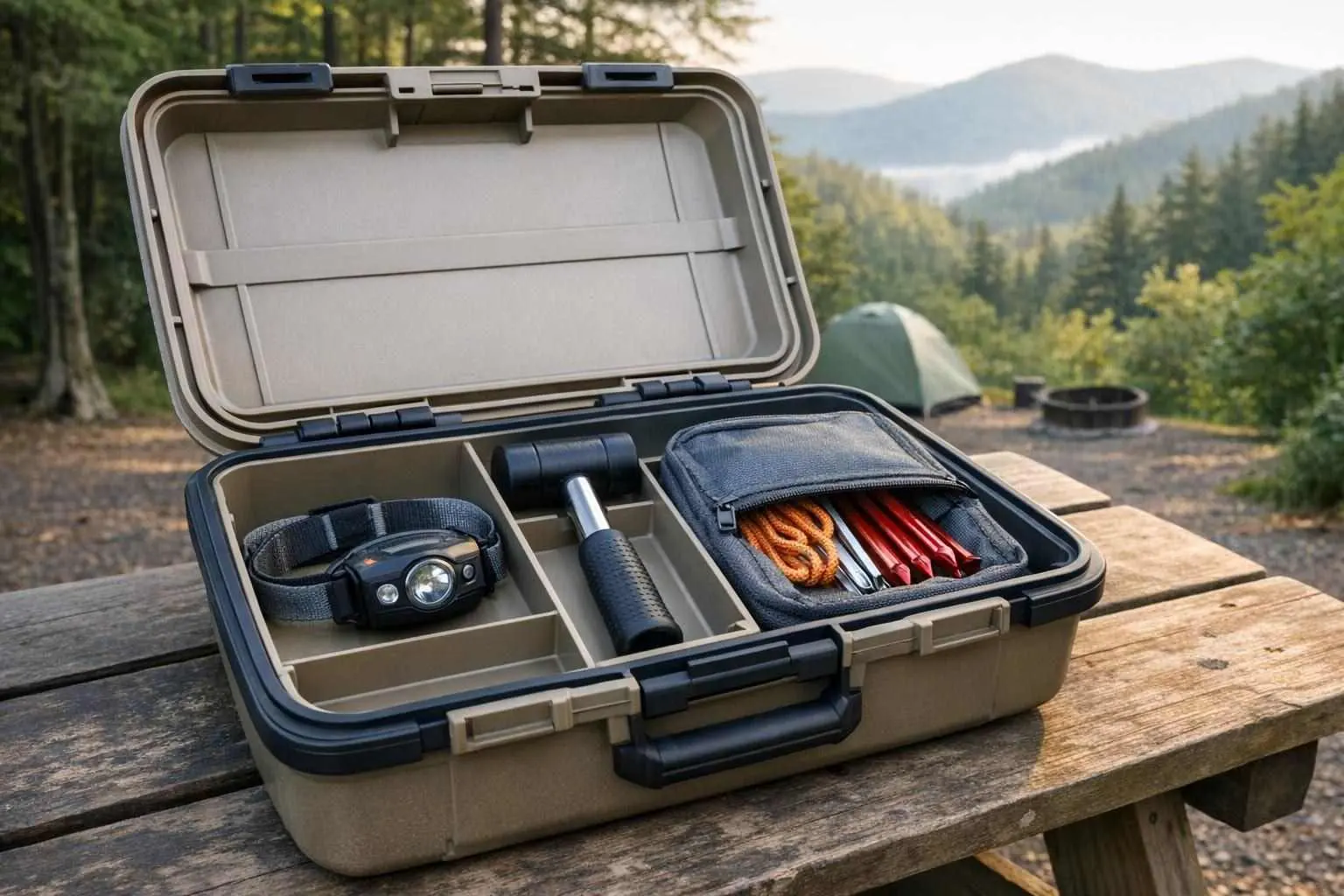
Although establishing a campsite could easily become a big, unorganized mess of a search for supplies, equipment, and more, an Arrival Box can serve to actually streamline all of the prior tasks. As opposed to digging around through the masses of your numerous sleeping bags, backpacks full of food, extra clothing, etc. in search of various essentials like your headlamps or your tent's stakes, and mallet, an Arrival Box is, quite literally, a simple and rather small container, ideally made of durable, weather-resistant supplies.
Prioritize Setup Essentials
Write down all the tasks you would like to have done upon arrival at the campsite and define the arrival box in light of those tasks. As an example, the tasks may include confirming the campsite, setting up tent, and finding a light source. Very young children, as well as very tired adults and children, may also like to have their shoes, water and snacks organized in the arrival box.
Lining the box is critical though to ensure you can find what you need when you need it. If you have a lot of valuable gear it may be wise to list out what you have in the box to ensure you do not accidentally lose something of value. A good arrival box should be smaller than a basketball and ideally have a lid to it so that you can easily dump everything out should you need to.
Organize for Efficiency
Once you've determined the needed items for your arrival box start to organize the contents to establish light, shelter and cleanliness areas. Some suggested contents for the box include:
– A headlamp or lantern
– Spare batteries
– Tent stakes and a small mallet
– Repair tape and cord
– Hand sanitizer or wipes
– A rubbish bag for waste
Some items will need special care, and may not fit well into an arrival box. Repair tools for tent stumps for example, may be hard to store safely within a container. Sturdy utility knives and scissors can also be awkward to store within the confines of an arrival box, for fear of damage to other items stored within. Even items that you intend to use for setup, such as lighters for stoves, could cause problems if stored within an arrival box. Other items, such as food, campsite newspapers and brochures, hygiene products, cooking utensils, and sleeping gear, should be grouped separately and organized before you depart.
Also consider throwing a notebook and pencil into the arrival box for taking campsite specific notes and for remembering where you left things. Note however that you should keep your own personal medications and valuables outside of the arrival box to protect them from being lost or misplaced.
Create a Dedicated Space for Each Item
Also be sure to organize your arrival box well in order to be as efficient as possible. Try to divide the arrival box in separate areas to store similar items. For example, the arrival box can start with the lighting and hygiene articles at the top, followed by the tent hardware and the repair articles. Small bags or pouches can be used to store the separate parts of the tent hardware, such as the stakes, cord and clips, in order to not lose them in the darkness of the box.
Choose a box that can close securely and be tossed about in the dark. Don't leave your Arrival Box open in a downpour. Label your box on the outside so that your Arrival Box can be distinguished from other similar containers. Avoid storing sharp items like stabbed together cord clips in your Arrival Box amongst your soft camping gear and food.
Pack your arrival box in the reverse order to which you need to set up your camp. In other words, put the items you need first at the top of the box. This is a simple but effective way to get the most out of your arrival box and to prevent you getting frustrated when trying to unpack.
Items to Leave Out
In addition to camping gear, there are other useful items to bring. However, these must not be packed in the arrival box, as they could cause problems. For example, a lighter for the camping stove can cause problems in the box. This must be stored separately from food in the campsite's food storage. Toiletries, cooking utensils and sleeping gear should also be stored separately in the arrival box to avoid confusion.
Hygiene items, i.e. muddy stakes and clean towels, need to be stored in different parts of your gear container. Wet items that will be put in your arrival box when you leave should be packed in a washable bag to prevent mildew and the box to be allowed to dry out after the trip.
As a group, pack an arrival box for your tent with one person being in charge. When you arrive at the campsite this person can unpack the tent in an orderly fashion, allowing others to find what they need when they need it.
Test Your Setup Before You Go
The main way you can test whether your packing checklist is adequate, is by setting up your arrival box next to your packed tent and simulating the first setup steps for each item. Note any problems such as a lid that is difficult to open and close or items getting tangled up together. Also, test whether any items need to be eliminated from your packing list as they are not actually used.
Remove from the arrival box any items which during the test you found you didn't use. Consider adding items to the arrival box which can aid in overcoming any delays encountered during setup. Test packing the arrival box with another person. The test is to see if all items can be found without referring to the checklist. Does the tent layout aid in the items being found easily.
Check your stock of items such as batteries and bin bags and restock as necessary. This will probably depend on the specific campsite you are visiting and not on past practice.
Make Packing Up a Smooth Process
On the return journey to your vehicle assign a space for items such as campsite permission and damp clothing that need to be packed temporarily. Conduct a quick sweep of the campsite for any items that may have been left behind. Most items such as small stakes, ties and pieces of tape can easily be lost in the dark. Only return to put the box in your vehicle after you have ensured that any wet items have been packed safely and responsibly.
Scavenge the campsite for lost items. Stakes, cable ties and gobbets of tape have a way of vanishing into thin air. Ensure all wet items are contained within the box prior to departing the campsite and be sure to stow the box in your vehicle before you depart for home.
An organized arrival box can enable you to have the things you need for your camping holiday to be found quickly to get on with more enjoyable things to do in the countryside, and in order to do this it would be sensible to familiarize yourself with this approach prior to your trip.